
.png)
First State Bank Recognized by Forbes as One of America’s Most Cybersecure Banks
When you choose a bank, you're trusting it with more than your money. You're also trusting it with your personal and financial information.
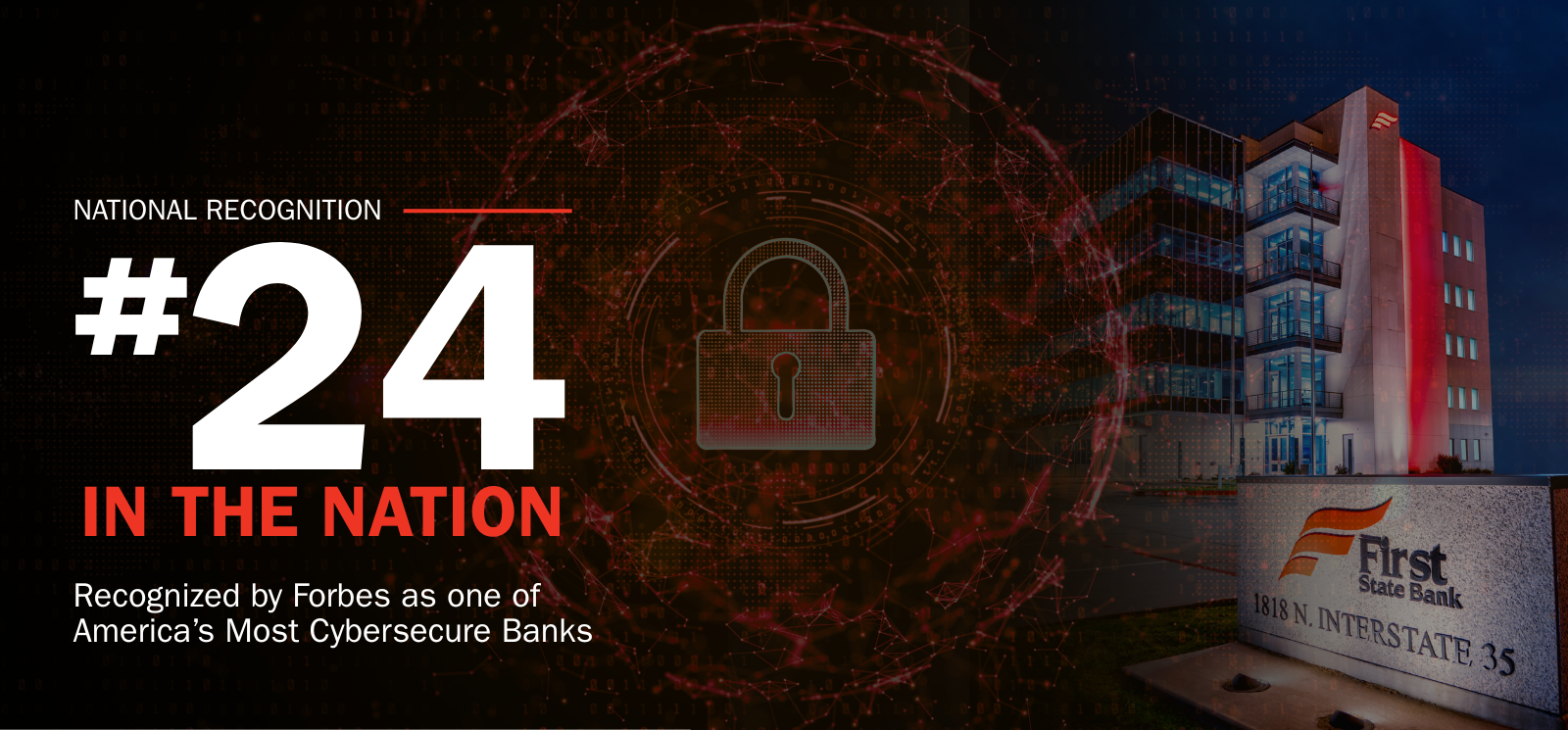
That's why First State Bank is proud to have been recognized by Forbes as one of America's Most Cybersecure Banks, ranking #24 in the nation on Forbes' 2024 list.
The inaugural ranking, created by Forbes in partnership with cybersecurity research company SecurityScorecard, recognized just 50 U.S. banks for their cybersecurity infrastructure and practices.
For First State Bank, the recognition reflects something we believe is essential to community banking: providing the personal, local service our customers expect while continuing to prioritize the security of the information and financial relationships they entrust to us.
What Does the Forbes Cybersecurity Ranking Measure?
Forbes and SecurityScorecard evaluated thousands of U.S. banks before identifying the 50 institutions included on the 2024 list.
According to Forbes, qualifying institutions were evaluated using a variety of cybersecurity factors, including security ratings, breaches and vulnerabilities, how quickly potential vulnerabilities are patched, regulatory compliance and cybersecurity leadership.
The methodology also considered organizational involvement in cybersecurity, including the presence and experience of cybersecurity leadership and cybersecurity expertise at the board level.
Banks could not pay to be considered or selected for the list.
First State Bank, headquartered in Gainesville, Texas, ranked #24 nationwide.
Why Cybersecurity Matters in Banking
Banking has become more convenient than ever. Customers can check balances, transfer money, deposit checks and manage their finances from almost anywhere.
That convenience also makes protecting financial and personal information increasingly important.
Cybercriminals continue to use tactics such as phishing emails, fraudulent text messages, impersonation scams and other methods designed to convince consumers to provide information or send money.
While technology and cybersecurity measures are an important part of protecting financial information, customers also play an important role in recognizing and stopping fraud.
That's why First State Bank encourages customers to remember three simple steps when something doesn't feel right:
Stop. Call. Verify.
If you receive an unexpected call, text or email asking for personal information, login credentials, verification codes or money, stop before taking action. Contact First State Bank using a trusted phone number or communication channel and verify the request.
Community Banking with Security in Mind
For generations, First State Bank has built relationships by knowing our customers, understanding our communities and being there when our neighbors need us.
Technology has changed how many of those relationships work, but the responsibility behind them hasn't changed.
Whether you're visiting a local branch, using digital banking or calling someone you know at First State Bank, our goal is to provide convenient banking while continuing to prioritize the protection of customer information.
Being recognized by Forbes as one of America's Most Cybersecure Banks is an honor and one more reason we're proud of the trust our customers place in First State Bank.
Is First State Bank a Secure Bank?
First State Bank was ranked #24 on Forbes' 2024 list of America's Most Cybersecure Banks. Forbes and SecurityScorecard evaluated qualifying banks using cybersecurity factors that included technical capabilities, security ratings, vulnerabilities, regulatory compliance, risk-management practices and cybersecurity leadership.
No financial institution or customer is completely immune from cybercrime, which is why cybersecurity requires an ongoing combination of technology, security practices, employee awareness and informed customers.
How Can I Protect Myself from Bank Fraud?
A few simple habits can help protect your accounts and personal information:
-
Never provide your online banking password or other sensitive credentials in response to an unexpected request.
-
Be cautious of messages creating a sense of urgency or pressuring you to act immediately.
-
Don't rely solely on caller ID to determine whether a call is legitimate.
-
Avoid clicking unexpected links in emails or text messages.
-
If you're unsure whether a communication really came from First State Bank, stop and contact us directly using a trusted phone number or communication channel.
When in doubt, remember:
Stop. Call. Verify.
First State Bank was ranked #24 on Forbes' 2024 list of America's Most Cybersecure Banks. The recognition and ranking are based on Forbes' published 2024 methodology and are not a guarantee against cybersecurity incidents, fraud or data breaches.
Is First State Bank a secure bank?
First State Bank was ranked #24 on Forbes' 2024 list of America's Most Cybersecure Banks, which recognized 50 U.S. banks for their cybersecurity infrastructure and practices. The ranking, created by Forbes in partnership with SecurityScorecard, considered factors including security ratings, vulnerabilities, regulatory compliance, risk-management practices and cybersecurity leadership.
While no bank or financial institution can guarantee complete protection from cybercrime, First State Bank continues to prioritize cybersecurity and the protection of customer information.
Was First State Bank named one of America's Most Cybersecure Banks?
Yes. Forbes ranked First State Bank #24 on its 2024 list of America's Most Cybersecure Banks. The inaugural list recognized 50 U.S. banks based on cybersecurity-related criteria evaluated by Forbes and SecurityScorecard.
How does First State Bank help protect customers from fraud?
First State Bank combines security practices and technology with ongoing customer education to help reduce the risk of fraud. Customers are also encouraged to remain alert for phishing, impersonation scams, suspicious calls and texts, and unexpected requests for personal or financial information.
First State Bank's fraud-prevention message is simple: Stop. Call. Verify. If a request involving your account seems suspicious, stop before taking action and contact First State Bank directly through a trusted communication channel.
Will First State Bank ever ask for my password or verification code?
Customers should be cautious of unexpected calls, texts or emails requesting sensitive account information, online banking credentials or verification codes. Never provide sensitive information simply because a caller or message appears to come from a trusted organization.
If you're unsure whether a request actually came from First State Bank, Stop. Call. Verify. Contact the bank directly using a phone number or communication channel you know is legitimate.
What should I do if I receive a suspicious call, text or email claiming to be from First State Bank?
Do not click unexpected links, provide sensitive information or send money based solely on the request. Instead, stop the interaction and contact First State Bank directly using a trusted phone number or communication channel to verify whether the request is legitimate.
Remember: Stop. Call. Verify.
What are common signs of a bank scam?
Common warning signs can include unexpected requests for passwords or verification codes, pressure to act immediately, threats that an account will be closed or compromised, requests to move or send money, suspicious links, or communications that simply don't seem right.
Caller ID and message appearance alone should not be used to determine whether a communication is legitimate, because scammers may attempt to impersonate trusted organizations.
How can I learn more about protecting my First State Bank accounts?
First State Bank provides fraud-prevention resources to help customers recognize common scams and protect their personal and financial information. Visit our Bank Fraud Awareness page to learn more about current fraud tactics, warning signs and what to do if you receive a suspicious request.
When something doesn't feel right, remember: Stop. Call. Verify.
First State Bank was ranked #24 on Forbes' 2024 list of America's Most Cybersecure Banks. The recognition and ranking are based on Forbes' published 2024 methodology and are not a guarantee against cybersecurity incidents, fraud or data breaches.